
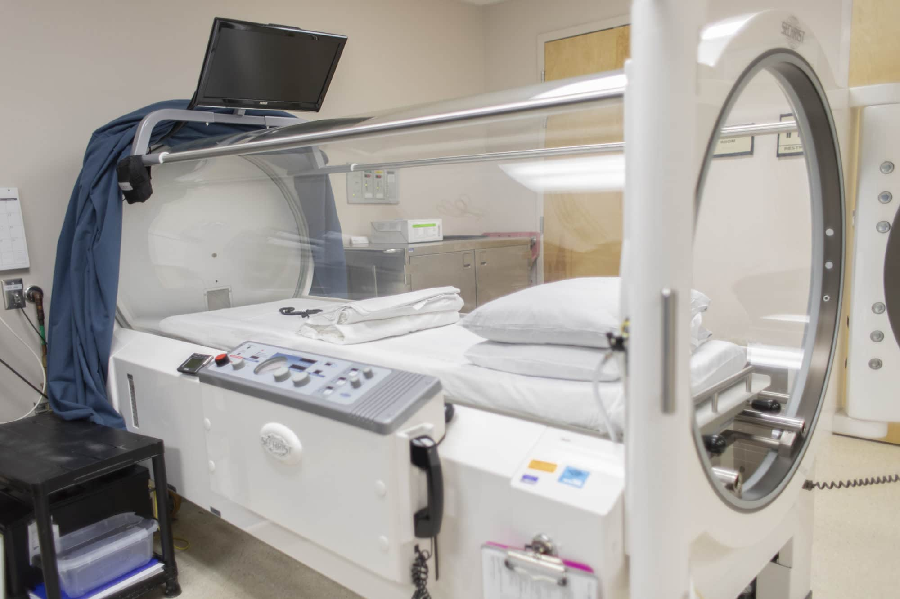
Hyperbaric oxygen therapy is a treatment option that can promote healing in chronic recalcitrant ulcers by increasing the oxygen supply to the wound. You could find isolated cases about hyperbaric chambers for wound healing with excellent results in the scientific literature. Still, the conclusions of the many clinical trials available are not so encouraging. The objective of this post is to know more in detail about this treatment modality.
What is hyperbaric oxygen therapy (HBOT)?
It consists of administering pure oxygen at a pressure higher than the atmospheric one to increase the partial pressure of oxygen (pO2) in the tissues. The patient is placed in an individual pressurized cabin, in which he or she usually breathes, or in a collective one with the administration of oxygen through a mask. There is no agreement on the most appropriate frequency, duration, and pressure. Usually, 100% oxygen is used at a pressure between 2 and 3 Absolute Atmospheres (1 Absolute Atmosphere= 760 mmHg) for 1-2 hours, five days a week, for 6-8 weeks. During treatment, arterial pO2 can exceed 2000 mmHg, when it usually is about 90 mmHg, and tissue levels of 200-400 mmHg can be reached.
Indications for this therapy include carbon monoxide poisoning, rapid decompression syndrome, acute traumatic ischemia, necrotizing fasciitis, osteomyelitis, and chronic wounds, mainly in diabetic feet.
What does hyperbaric oxygen therapy contribute to the healing of chronic wounds?
Hyperbaric oxygen therapy is a treatment option that can promote healing in chronic recalcitrant ulcers by increasing the oxygen supply to the wound. In the scientific literature, we find isolated cases and series with excellent results, but the conclusions of the many clinical trials available are not so encouraging. The objective of this post is to know more in detail about this treatment modality.
What is hyperbaric oxygen therapy (HBOT)?
It consists of administering pure oxygen at a pressure higher than the atmospheric one to increase the partial pressure of oxygen (pO2) in the tissues. The patient is placed in an individual pressurized cabin, in which he or she usually breathes, or in a collective one with the administration of oxygen through a mask. There is no agreement on the most appropriate frequency, duration, and pressure. Usually, 100% oxygen is used at a pressure between 2 and 3 Absolute Atmospheres (1 Absolute Atmosphere= 760 mmHg) for 1-2 hours, five days a week, for 6-8 weeks. During treatment, arterial pO2 can exceed 2000 mmHg, when it usually is about 90 mmHg, and tissue levels of 200-400 mmHg can be reached.
Indications for this therapy include carbon monoxide poisoning, rapid decompression syndrome, acute traumatic ischemia, necrotizing fasciitis, osteomyelitis, and chronic wounds, mainly in diabetic feet.
What are the possible adverse effects of TOH?
The most common is the appearance of progressive lenticular myopia, which is usually reversible shortly after the end of treatment. Due to the increase in pressure, the middle ear’s barotrauma can be triggered, which can be avoided if the patient is trained in preventive maneuvers (Valsalva, yawning) or tympanostomy placement tubes.
THO is contraindicated in patients with pneumothorax, chronic obstructive pulmonary disease, a history of thoracic or ear surgery, and pregnancy.
As the treatment is performed in a cabin, it must be considered that it can trigger anxiety in patients with claustrophobia.
Since oxygen at high doses is toxic to the central nervous system and lungs, daily exposure should not exceed 2 hours. Besides, it is common to have periods of rest breathing normal air every 20-30 minutes of treatment as a preventive measure. These measures make THO a safe treatment.
